

Clínica Jané / Treatments / Root canal treatment
Root canal treatment in Barcelona
We treat the inside of the tooth to help you keep it. Because when a tooth can be saved, it’s worth trying.

Watch the video
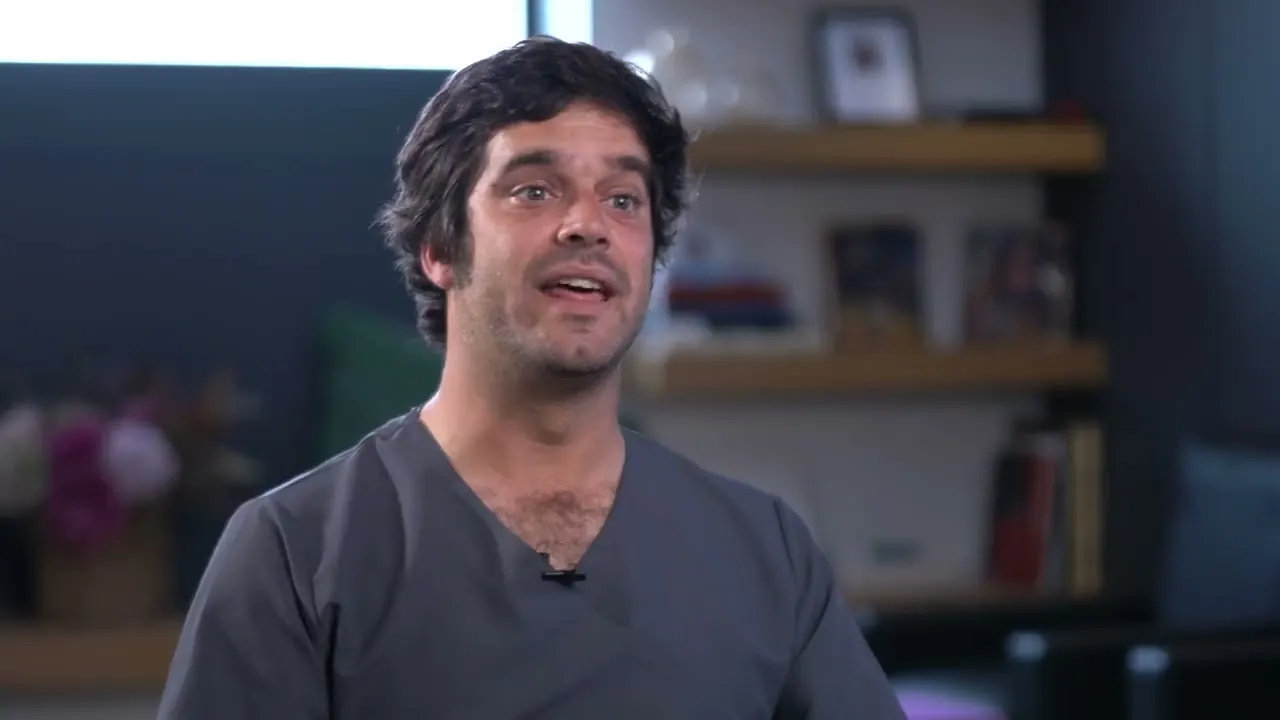 Watch the video on YouTube
Saving the tooth
When the dental pulp, the tissue inside the tooth, is damaged or infected, a root canal treatment can save the natural tooth and avoid extraction. At Clínica Jané, in Sarrià-Sant Gervasi, we assess each case individually to know whether it’s the right option, and explain the process clearly and calmly.
What is it and when is it needed?
Root canal treatment works on the inside of the tooth, where the pulp and nerves are. When this tissue becomes inflamed or infected, it may need to be removed, the canals cleaned and sealed to prevent new infections.
It may be indicated for deep decay, trauma or damage affecting the pulp. Warning signs include spontaneous pain, lasting sensitivity to cold or heat and discomfort when chewing. But some problems progress without pain: that’s why an assessment matters even without obvious symptoms.
Dr. Marc Encinas’s experience
Dr. Marc Encinas is an expert in problems affecting the most sensitive structure of the tooth and a lecturer in the Endodontics Department of the Universitat Internacional de Catalunya (UIC). His specific knowledge means each case is treated with attention to detail and one clear aim: to keep the natural tooth whenever possible.
How is it done?
Dr. Encinas usually performs it in a single session, although the time depends on the tooth and the complexity of the case. There are four steps:
Diagnosis
We examine the tooth and run the tests needed to know the extent of the problem.
Access
Under local anaesthesia, we reach the affected pulp.
Cleaning and sealing
We clean and disinfect the root canals and seal them to reduce the risk of infection.
Restoration
We rebuild the tooth to restore its function and protect it as it needs.
Does it hurt?
It is done under local anaesthesia to control pain during the procedure. Afterwards you may feel sensitivity or discomfort for a few days, especially when chewing. How much and for how long depends on the tooth’s previous state. If the pain increases, persists or new symptoms appear, get in touch with us.
After the treatment
Follow the dentist’s instructions and keep up good hygiene. Until the tooth is permanently restored, avoid chewing hard food with it.
The final restoration is an essential part of the treatment. Depending on how much structure has been lost, a rebuild may be enough or a crown may be advisable to protect the tooth from fractures.
What if it hurts again?
A treated tooth can cause discomfort again for various reasons, such as a new infection, a leak or a crack. It needs to be examined to find the cause. Depending on the diagnosis, a re-treatment or another option may be considered: it depends on the tooth’s state and its chances of recovery.
Frequently asked questions
We know you have questions, doubts and fears. Take a breath and smile: you’re in good hands. If something isn’t here, write to us.
How long does a root-canal-treated tooth last?
It can last many years. It depends on the tooth structure preserved, the quality of the restoration and hygiene habits. Regular check-ups help keep an eye on it.
Do I need a crown afterwards?
Not always. It depends on the previous damage and how much tooth is left: sometimes a rebuild is enough; other times a crown adds protection.
Can a root canal be avoided?
It depends on the state of the pulp and the damage to the tooth. Some lesions can be treated other ways; an irreversibly damaged or infected pulp may need a root canal. A timely assessment helps choose the right option.
Does it guarantee the tooth will be saved?
Not in every case. The outlook depends on the extent of the damage, whether there are cracks and whether the tooth can be properly restored. The diagnosis lets us weigh the options and tell you what to expect.

Need a tooth that worries you checked?
- Calls & WhatsApp
- (+34) 93 253 04 33
- info@clinicajane.com
- Address
- c/ Marià Cubí 110, 08021 Barcelona
- Nearest parking (2 minutes)
- Les Amèriques, Carrer de Santaló, 30